
 Book a consultation

Snow and cold can cause serious discomfort to a pet: what do you need to know?
January 27, 2026
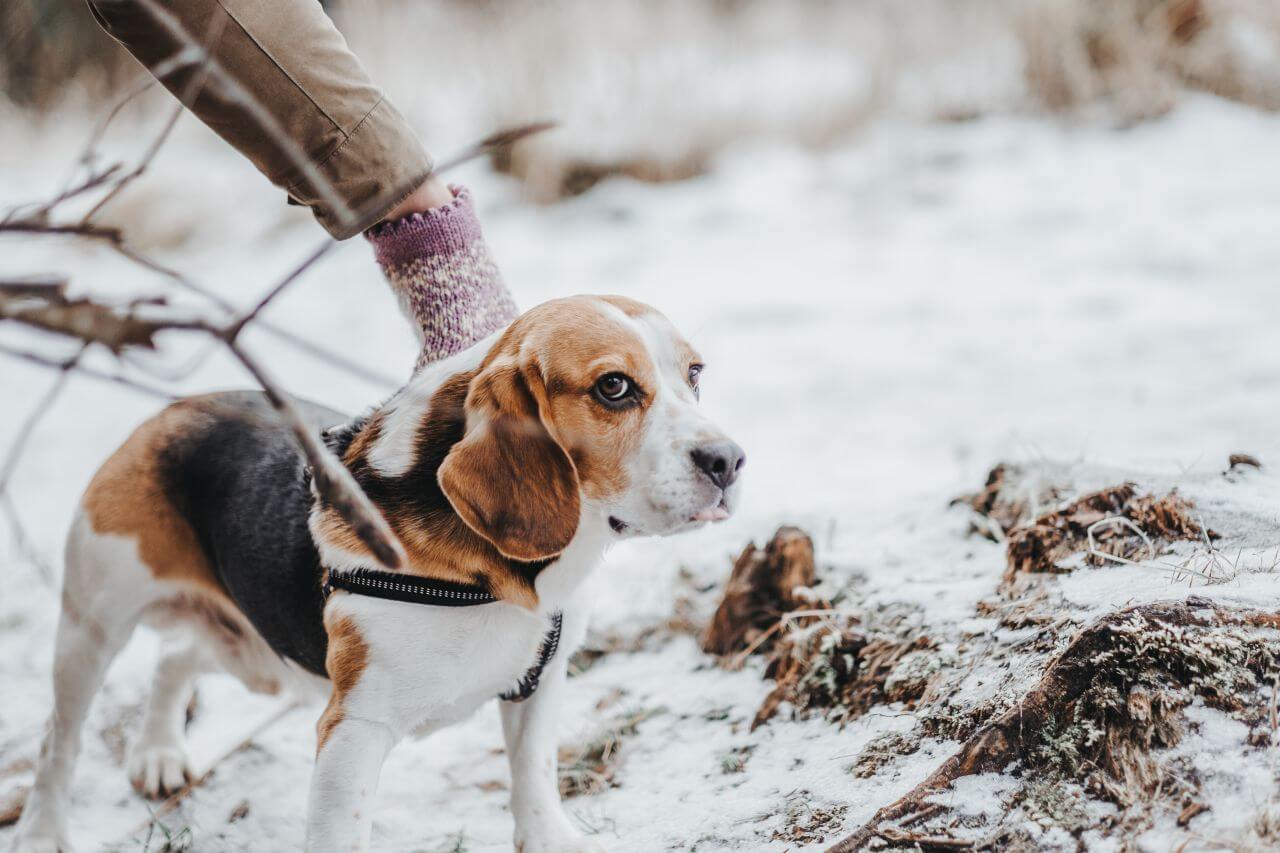
Last week, when it started snowing, the biggest winter enthusiasts took out their sleds or skis and headed to the fields or the hill. Many also took their pets – to let them run around and play. But the veterinarian warns that snow, cold, and pets are not always a suitable combination.
The risk of injury is higher in winter
Of course, it’s one thing when a dog is moving and running all the time – then it won’t get cold. “It’s a completely different matter if a little Chihuahua is hopping from one paw to the other while its owner chats with a friend, and it’s chilly outside,” says Vytautas Siaurys, the founder of the veterinary clinics ‘Siaurio Šnauceris.’
When the weather suddenly turns very cold, we must not forget that walking the dog needs to change – after all, at home we sometimes wear short sleeves even in winter, but when we go outside, we dress warmly. And the dog suddenly goes from 20 degrees of warmth into 10 degrees of cold.
“For his body, this is a huge stress, so the likelihood of catching a cold increases significantly. In the cold, you should try to walk your puppy as briefly as possible or let him move around constantly. However, moving in winter is not easy for a dog either – the risk of joint injuries or ligament sprains increases sharply. Just as it’s slippery for us, it’s slippery for the animal, so it’s worth sparing him and, if it’s slippery, not throwing a ball or stick, because any injury will require a long recovery and cause discomfort,” notes V. Siaurys.
He says that often people, thinking they are doing a good deed, temporarily move a dog living in a kennel or outdoor pen to a warmer place during extreme cold. This should absolutely not be done – if the animal lives outside, it must stay there; it is better to try to insulate the kennel, add straw so the dog does not lie on bare ground, but taking it inside, even temporarily, is definitely not recommended. Such temperature changes will cause huge stress to the dog’s body, and it is more likely to get sick. According to the veterinarian, it is better to adjust the diet of an outdoor dog during colder periods – giving it more food so that the pet stays warm.
Train the dog, or not?
Siaurys also notes that it is common for owners of smaller dog breeds to place their beds near a radiator at home, which is another mistake. A puppy that has been lying warmly by the radiator will, when it’s time, go out for a walk, and outside – it’s winter, with snow up to its belly, even though its back was just warming up.
“The body has a hard time coping with such temperature differences, and it is often seen that owners, looking for a solution, also dress their animal. That might be okay, but nowadays, when nearly 80% of dogs are allergic even to a well-loved knitted or purchased garment, it is not the best solution. And if you do decide to dress your dog, watch for signs of allergy and make sure they are not scratching the areas in contact with the clothing. There is a high chance that snow will remain between the clothing and the dog’s fur, so it’s better to let them shake off that white, beautifully falling flake,” advises V. Siaurys.
In winter, the question often arises: what about bathing the dog? Is it better to do it in the morning or in the evening? “Only in the morning and preferably on the weekend,” answers a veterinarian. “After bathing in the morning, it’s essential to engage with the dog as much as possible, play with it, because when it moves, circulation will be active, and the coat will dry. If you bathe the dog in the evening, as is often heard, and leave it to dry overnight, it will be wet in the morning, and how can it dry if it has been lying down all the time?”
The specialist advises always following common-sense logic and not going to extremes – some people do not take small breed dogs outside during cold weather at all because they fear the dogs will get sick, which is also a huge mistake. This decision disrupts the dog’s toilet routine and learned reflexes, as the animal is forced to do its business at home, which is particularly bad practice. It is better for the dog to run outside for two minutes and quickly take care of its business despite the cold than to relieve itself inside.
It is also very important to watch your pet, and if it starts to paw or chew its legs, check – often snow clumps gather between the toes, making it hard for the dog to walk, causing pain, and increasing the risk of skin injury – be sure to remove the snow.
Nail and foot injuries and their damage
The owner is responsible for their animal and must assess the environment in which their dog spends time. Often, after a fresh snowfall, it’s impossible to see broken pieces of glass, and suddenly – an injury, a paw bleeding all over. Another danger is the layer of ice that forms as snow freezes. It might be fun to watch a small breed puppy joyfully running over it, but a large shepherd, Labrador, or another breed will obviously break through the ice and come back bleeding – every dog has more or less developed rudimentary toes, which can be injured when the snow crust breaks.
“It’s not uncommon for owners to let their pets lick their wounds, because, as they say, a dog’s saliva is full of disinfecting substances. That may be true, but I’m quite skeptical about this ‘healing’ method for a few reasons. First, dogs often suffer from gum disease, so talking about tongue hygiene is probably pointless. On the other hand, a wound needs to close and heal properly, but the dog doesn’t understand this and constantly licks it, removing the thin layer that has formed over the wound, which complicates the healing process. It’s similar with cracked nails, which most often occur in winter – the nail splits, and then it’s necessary to surgically remove the broken part to prevent microbes from entering the wound. Owners tend to pay less attention to such problems until eventually the untreated dog’s nail causes tissue swelling and joint damage. Then it has to be removed,” explains Vytautas Siaurys.
According to him, such unforeseen expenses and unpleasant treatment for the dog can be avoided – you just need to trim its nails regularly. The likelihood that a well-maintained, nicely trimmed nail will break is very small. Therefore, you can enjoy winter with your pet and avoid injuries, but you need to use common sense, logic, and discuss any arising questions with a specialist.
Related posts
-
 February 11, 2026
-
 January 28, 2026
An idea for an exceptional gift!
Read more -
 January 28, 2026
True stories: beloved pets were suggested to be put to sleep. They were given hemodialysis for their second birthday.
Read more -
 January 28, 2026
Complications that can deprive an animal of the ability to move are now treatable
Read more -
 January 27, 2026
Snow and cold can cause serious discomfort to a pet: what do you need to know?
Read more