Book a consultation

Protection Against Parasites
As autumn approaches and the weather begins to cool, our years of practice have taught us exactly what to expect: a surge in tick activity. During this time each year, we see an increased number of patients infected with tick-borne diseases. This happens because these parasites need to feed before winter, so it is vital to remember and be even more diligent with parasite protection. Proper use is key to effectiveness, so today we want to remind you about the available protection methods and how to use them correctly.
- Collars: Protect against ticks and fleas. These are suitable for short-haired pets and, depending on the type, can remain effective for 4 weeks or up to 7–8 months.
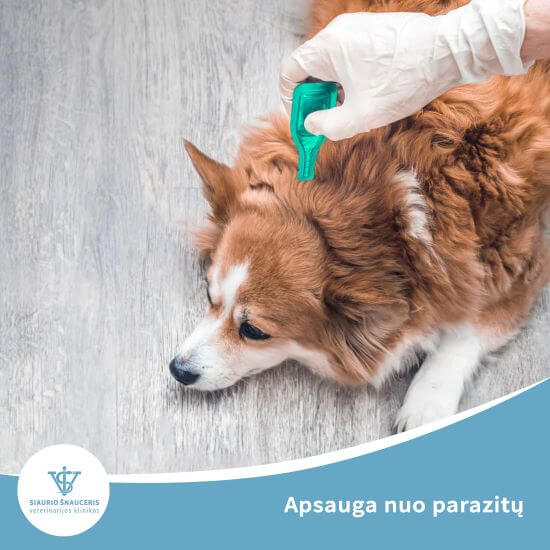
- Spot-on drops: Protect against ticks and fleas. The liquid is applied directly to the pet’s skin in the shoulder blade (withers) area to prevent them from licking it off. This should be repeated every 3–4 weeks. It is very important not to bathe or get your pet wet for 3 days after application.
- Tablets: Protect against ticks, fleas, and mosquito-borne microfilariae. There are two main types of chewable tablets, administered every 4 or 12 weeks.
- Repellents: Protect against ticks and mosquitoes. These can be used as an additional layer of protection when traveling to forested areas where the concentration of ticks is much higher than in meadows.
The effectiveness of protective measures is highly individual. What works for one pet may not suit another due to coat texture, lifestyle, or living environment. Your veterinarian can objectively help you choose the most suitable and individual protection plan for your pet.