Book a consultation

Feline Urolithiasis
Feline urolithiasis is a health disorder where uroliths, initially resembling sand, begin to form in the urinary bladder. These gradually increase in size, forming small stones (uroliths) several millimeters wide that can obstruct the urinary tract. When the urinary tract is blocked, the cat is unable to urinate, suffers from intense pain, and develops inflammation. If the blockage persists, it can lead to acute kidney failure.
Castrated male cats and certain breeds (Burmese, Persian, Himalayan) are at a higher risk of developing this condition. A cat’s dietary habits and nutrition also play a significant role—low water intake and a diet high in minerals (magnesium, phosphorus, calcium) contribute to stone formation.
Symptoms that can help identify the disease:
- Blood in the urine;
- Frequent and strained urination;
- Urinating in unusual places (outside the litter box);
- Urinating in very small amounts;
- Painful urination accompanied by meowing/vocalizing;
- An enlarged, hard, or painful abdomen.
If you notice these symptoms, it is essential to visit a veterinarian immediately. By taking a urine sample and performing ultrasound and blood tests, a diagnosis will be established and treatment will be prescribed. This may include flushing the urinary tract or, in more severe cases where stones are too large to pass, surgical intervention.
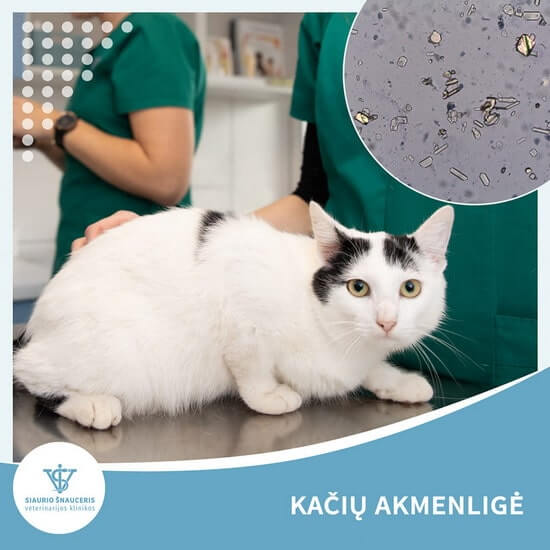
It is important to know that once a pet has encountered this disease, it can recur. Therefore, a balanced diet is vital. In the corner of our featured photo, you can see what struvite crystals found in urine look like under a microscope; these confirmed the diagnosis for one of our clinic’s patients.
The specialist team at “Siaurio Šnauceris” veterinary clinics recommends prioritizing prevention by performing a urinalysis every six months, especially for cats in high-risk groups. This allows us to detect potential problems early and ensure effective prevention.