Book a consultation

Does your pet have worms?
How often do you deworm your pet? Do you know how to do it correctly so your four-legged friend avoids this unwanted company? Furthermore, did you know that you can easily catch helminths (parasitic worms) from your beloved pet? Here is a brief overview of the topic and the indispensable, reliable method for detecting helminths: the fecal flotation test.
Helminths are parasitic worms that live inside an animal’s or human’s body. Animals can become infected through contaminated soil, water, or feces. Humans can become infected through contact with a sick animal; even if the animal isn’t showing symptoms, it may carry eggs on its paws or snout. If hands are not washed properly after contact, these eggs can enter the human body.
Signs of a possible helminth infection:
- Poor appetite;
- Weight loss/thinness;
- Lethargy;
- Vomiting;
- Diarrhea.
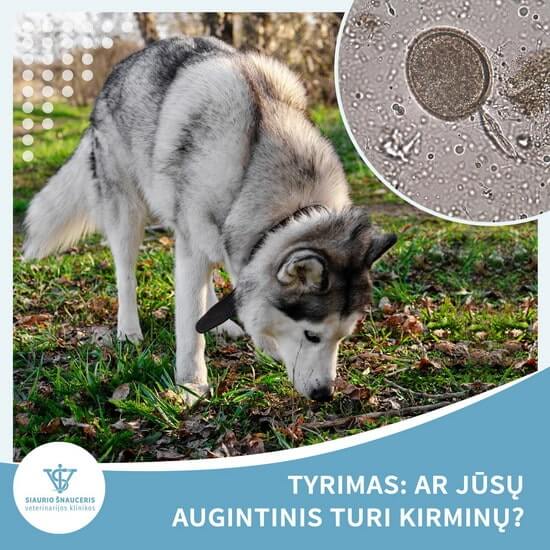
It is easy to find out if worms are the cause by bringing a stool sample to the veterinary clinic. We will perform a fecal flotation test, and if parasite eggs are detected, we will prescribe the necessary treatment.
Prevention and Deworming
Prevention is always key, so pets must be dewormed from an early age. We recommend deworming puppies and kittens every month, and for adults—following the latest scientific guidelines—every 3 months.
You can choose anthelmintics (deworming medication) in the form most convenient for your pet: tablets, pastes, or spot-on drops. It is important to note that you should not stick to just one brand or type of medication. Recent studies show that parasites have developed resistance, so rotating different types of medication is very important.
To monitor how well your pet is fighting off helminths, the specialists at “Siaurio Šnauceris” recommend performing a fecal flotation test once a year. For example, when visiting for annual vaccinations, simply bring along a stool sample for testing.