Book a consultation

Hip Dysplasia in Dogs
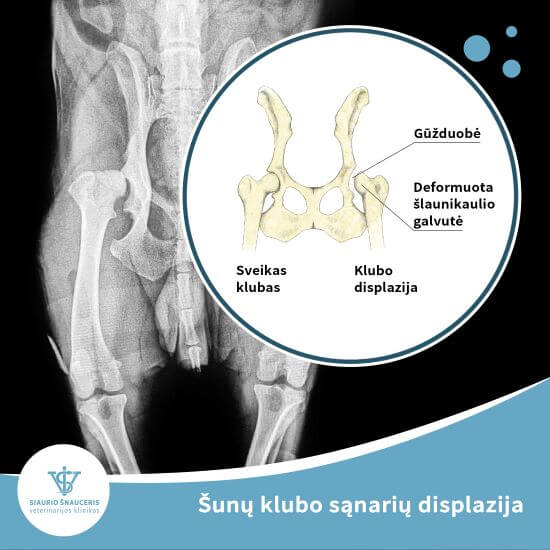
Hip or elbow dysplasia is a genetically inherited, congenital condition that typically manifests during a puppy’s rapid growth stage, around 4 to 10 months of age. In dogs suffering from hip dysplasia, there is an anatomical mismatch between the femoral head and the socket (acetabulum). Instead of sliding smoothly, the bone rubs against the joint, leading to pain over time, the development of arthritis, muscle atrophy, and eventual loss of joint function.
Dysplasia is most common in giant breeds (Mastiffs, Great Danes, Caucasian and Central Asian Shepherds, Saint Bernards, Bernese Mountain Dogs, Newfoundlands, etc.) and large breeds (German Shepherds, Golden Retrievers, Labrador Retrievers), though it can also occur in smaller dogs. This pathology is hereditary and incurable; therefore, the most crucial role in preventing this disease lies with breeders—dogs with dysplasia must not be used for breeding.
It is important to watch for the following symptoms:
- Limping or lameness;
- Difficulty rising from a lying position;
- Difficulty climbing stairs or jumping into a car.
Dysplasia is diagnosed via X-ray (radiograph), which shows how far the disease has progressed. When diagnosed early, preventive measures such as physiotherapy and supplements can be taken to significantly improve the pet’s future quality of life. In more severe cases, surgical treatment, such as hip replacement surgery, may be applied, which also markedly improves the pet’s well-being.
If you notice any of the symptoms listed above or if you are raising a puppy of a high-risk breed, we strongly recommend bringing them in for a veterinary examination as early as possible. Early intervention can prevent the development of severe forms of dysplasia.