Book a consultation

Have questions?
Our specialists
Animal endoscopy
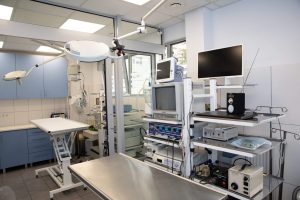
Endoscopic examinations are diagnostic procedures that veterinarians use to examine dogs and cats. Endoscopic procedures allow the veterinarian to insert a small camera, called an endoscope, into the animal’s body to assess the condition of internal organs and detect functional disorders.
Here are some animal endoscopic examinations that can be performed on dogs and cats:
- Gastroscopy: This examination allows the veterinarian to assess the condition of the stomach and remove or evaluate any abnormalities, such as ulcers or gastritis.
- Colonoscopy: This is a procedure used to assess the condition of the intestines. It can be useful for diagnosing gastrointestinal diseases or looking for foreign objects.
- Bronchoscopy: This is an endoscopic examination of the lungs and bronchi. It can be useful for diagnosing respiratory diseases or looking for foreign objects or tumors.
- Rhinoscopy: This is an endoscopic procedure used to assess the condition of the nasal cavity. It can be useful for diagnosing respiratory infections or tumors.
- Cystoscopy: This is an endoscopic examination used to assess the condition of the bladder and urethra. It can be useful for diagnosing urinary tract infections, foreign objects, or tumors.
Animal endoscopy is very useful in a veterinarian’s toolkit because it allows direct visualization of the condition of internal organs without surgical intervention. It helps diagnose diseases and determine a treatment plan, thereby improving the animal’s quality of life. However, performing these procedures may require sedation or anesthesia to ensure the animals are comfortable and the examination is safe.