Book a consultation

Pacemaker
Until recently, pacemakers in veterinary medicine seemed like an unimaginable thing, but for some time now, they have been possible and are saving pets’ lives. When a pathological heart rhythm is diagnosed—where the heart beats too slowly (in cases of bradyarrhythmia, the heart beats fewer than 50 times per minute, while a dog’s normal heart rate is 70-120 beats per minute)—circulatory failure develops. This means the body’s cells receive too little oxygen, and the animal becomes lethargic and loses consciousness. Upon detecting bradyarrhythmia, medication is prescribed first, but if no effect is achieved, a pacemaker is implanted.
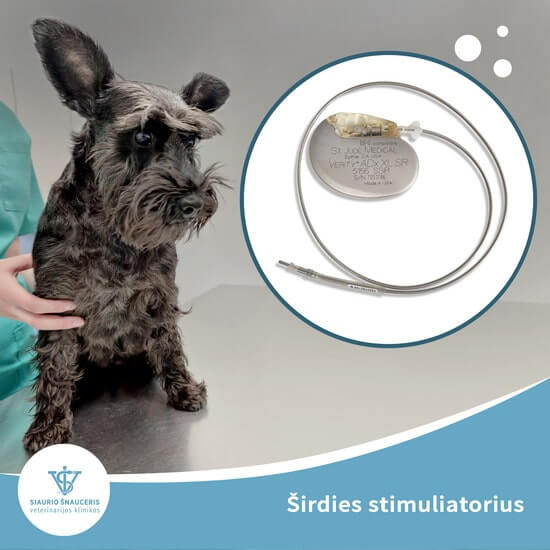
The pacemakers used for pets are the same as those used for humans. A pacemaker consists of a pulse generator and specialized wires called pacing leads. The pulse generator is approximately the size of a silver dollar, only thicker; it contains the power supply and a computer that monitors and controls the heart rhythm. The leads transmit electrical impulses in both directions between the pulse generator and the heart, so the pulse generator “knows” when to send an impulse and when to wait. The pacemaker lead is usually guided through the jugular vein on the right side of the neck, down into the inside of the heart, and attached to the heart wall. The pulse generator is placed in a pocket under the skin—usually on the side of the neck.
Inpatient treatment is recommended after surgery while the pacemaker and lead “heal” into their positions. If no additional complications occur, the animal can live a normal life once the heart rhythm is fully regulated after a couple of weeks.
We are the only veterinary clinic in Lithuania performing this surgery. We implanted the first pacemaker 6 years ago.